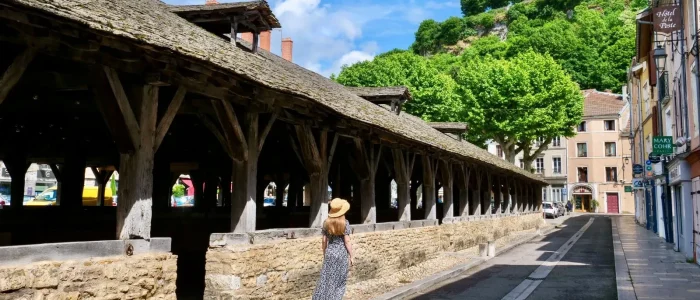

La porte neuve dite porte François Ier
The New Gate was created in the 16th century within an old tower of the city walls. It was the last gate to be opened. This gate can be considered a symbol of the transition between the Middle Ages and the Renaissance.
While the Quirieu gate was walled up, the New Gate was built in the first part of the 16th century.
century. It was originally an old watchtower that was transformed, as evidenced by the splays, that is to say the angled sections in the thickness of the walls, and the old openings visible on the inside. This would be the last doorway to be opened.
It is also called the François I gate to recall the passages that this sovereign made to Crémieu during the Italian wars but also, during a pilgrimage that he made to the old chapel at the entrance to the caves of La Balme, in the company of his mother, Louise of Savoy.
This gate can be considered a symbol of the transition between the Middle Ages and the Renaissance. Indeed, its machicolated parapet, that is, the high, open balconies, is a typical defensive feature of the medieval period. However, below it, in the upper third of the gate, in the middle, you will notice an opening. This is a gunport for a culverin. This device foreshadows the large-scale use of gunpowder and heavy artillery in combat, thus opening the door to much more deadly battles.
Rankings & Labels
- Listed historic site and monument
Themes
Location details
- In the city
- In the historic center
Visit
Language(s) of the visit
Audio guide language(s)
Individual visit services
- Unguided individual tours permanently
Group visit services
- Unguided group tours permanently
- Guided group tours on request
Opening
All year round, every day.
Prices
Free.
Services
Equipment
Services
Home animals
Accessible tourism
Linked offers
On site:


La maison de Martinas dite des Trois Pendus
Historical site and monument


L’ancien château delphinal
Historical site and monument

Related to:
